Cybersecurity Models and NEAR AI Red Launch

In just 48 hours on October 20–21, the world faced a wave of disclosures across the software stack. PHP2Shell exposed critical flaws in PHP, potentially affecting 70% of the internet. Node.js patched a remote code execution vulnerability. An official LiteLLM release shipped credential-stealing malware. Railway warned that attackers may have obtained decrypted customer secrets.
This pressure is added by AI. In Railway's case, the company's preliminary investigation suggests attackers used AI models with safety restrictions removed to carry out sophisticated exploits against its infrastructure. Yet security teams and researchers cannot defend against it because they cannot access AI capabilities for cybersecurity: the models simply refuse to address the topic.

Security teams also need to keep their findings confidential while preparing a fix. For example, for the PHP2Shell incident, researchers privately reported the vulnerabilities and coordinated a fix. But details leaked before the planned disclosure, forcing the PHP team to bring forward its security release and leaving defenders scrambling to respond.
Security teams and researchers need capable AI that supports their work and protects the sensitive information behind it.
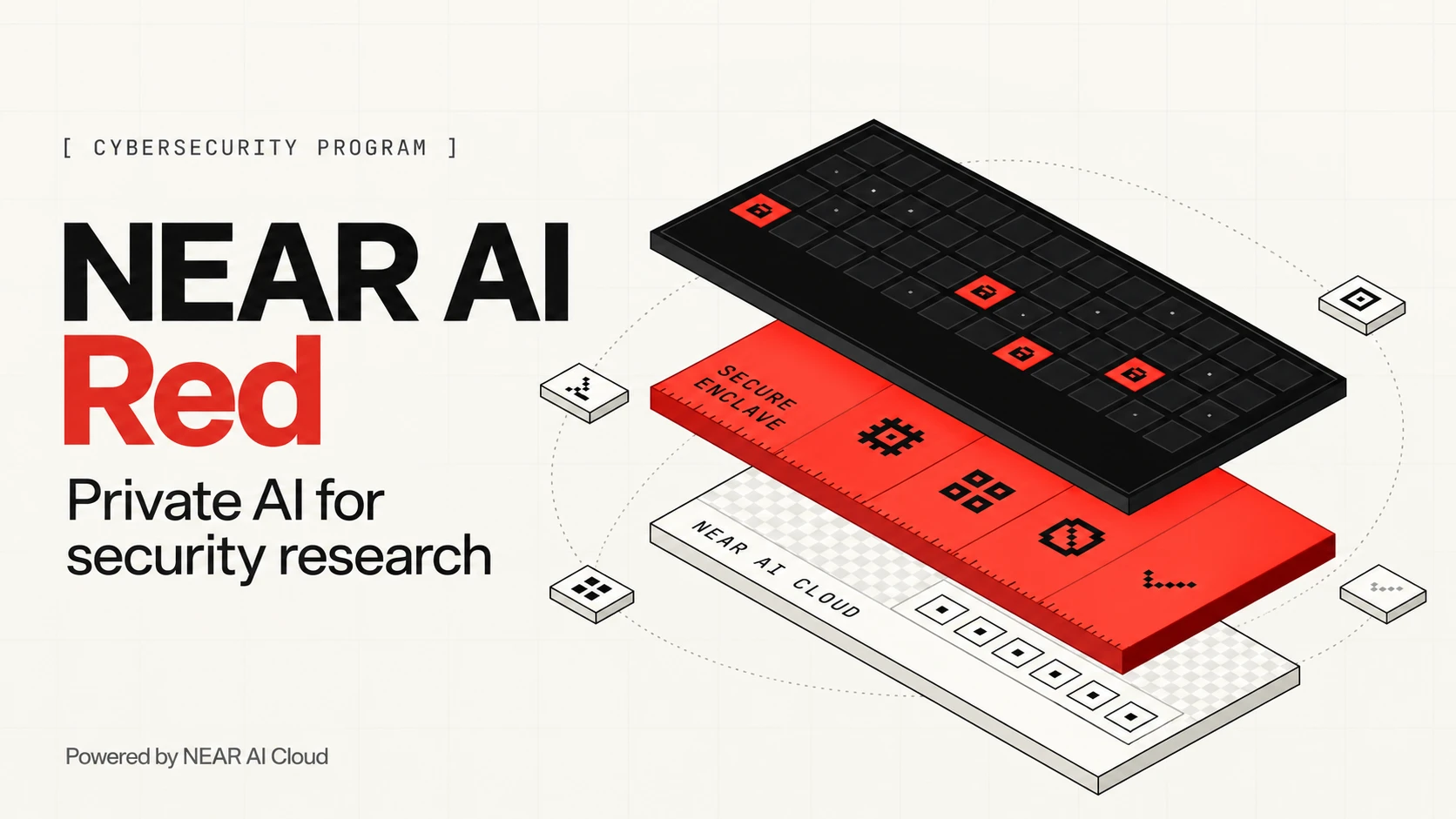
That's why we're launching abliterated models for cybersecurity and NEAR AI Red, a program that helps security teams put powerful AI to work with confidential inference and protections they can verify.
What NEAR AI provides
Models that support cybersecurity work. We're starting with abliterated versions of DeepSeek V4.1 Flash and Qwen 3.8, modified to reduce refusals that interrupt legitimate security testing. We plan to add more cybersecurity-focused models.
Confidential inference. Models run inside trusted execution environments (TEEs), protecting sensitive code and findings during processing. Supported end-to-end encryption keeps prompts encrypted until they reach the model's protected environment.
Verifiable protections. Hardware attestation lets you verify the execution environment. Where supported, response signatures bind your request and response to an attested signing key.
The models are publicly available, with additional support for security teams through NEAR AI Red.
Join NEAR AI Red
NEAR AI Red is built for cybersecurity researchers and enterprise security teams. The program combines discounted inference with direct support and opportunities to shape what we build next.
Participants receive:
- 20% off the first month.
- Dedicated support. A private Slack channel for your team to get help and share feedback.
- Early access. Try upcoming models and security-related features on authorized security work.
- Input into the roadmap. After your first month, we'll schedule a check-in to discuss your experience, needs, and priorities.
- Webinars and workshops. Opportunities to learn and explore security workflows with our team.
- Co-marketing opportunities. We'd love to share our wins with the world.
In return, we ask you to share what you're building, what works, and what needs improvement.
To join, complete a short questionnaire. We review submissions manually and follow up with next steps.
Grounded in security research
We use AI internally for cybersecurity research. Our teams have identified vulnerabilities in products from both a large company and a smaller startup, and reported the findings directly to their teams. Our partners and early adopters support it.
"Security research only works if the findings stay private until they're fixed. That's why we're interested in what NEAR AI is building: uncensored models we can run privately, with a way to verify that no one else sees what we run, not even the provider."
— David Schwed, CTO, OpenReserve, former CISO, Robinhood
"Grego.ai can now use uncensored models without exposing what we find, while safely testing end-to-end proofs of concept in controlled environments without refusals."
— Gregorio Maspero, Co-founder & CTO, Grego AI
That experience informs what we're building with NEAR AI Red.
Looking into the future
AI is changing the balance of power in cybersecurity. We're working to shift it toward defenders.
Long term, our ambition goes beyond helping teams find and fix vulnerabilities faster. We're also working on formal verification: mathematically proving that software meets specified security properties. This could give teams stronger assurance that critical systems behave as intended, including under conditions an attacker might exploit.
Those guarantees depend on what you prove and the assumptions behind it. They complement security testing and research, helping us move toward software whose security properties we can demonstrate.
Start finding and fixing vulnerabilities today. Apply to the NEAR AI Red cybersecurity program.